 EN
EN


When investing in equipment for gymnastics training facilities, fitness centers, or competitive venues, durability becomes a paramount concern. A professional gymnastics bar must endure not just occasional use by skilled athletes, but the relentless demands of daily commercial operations where multiple users of varying skill levels train continuously. The question of whether such equipment can truly withstand this intensive wear pattern involves understanding material engineering, manufacturing standards, usage environments, and maintenance protocols that collectively determine long-term performance and safety.
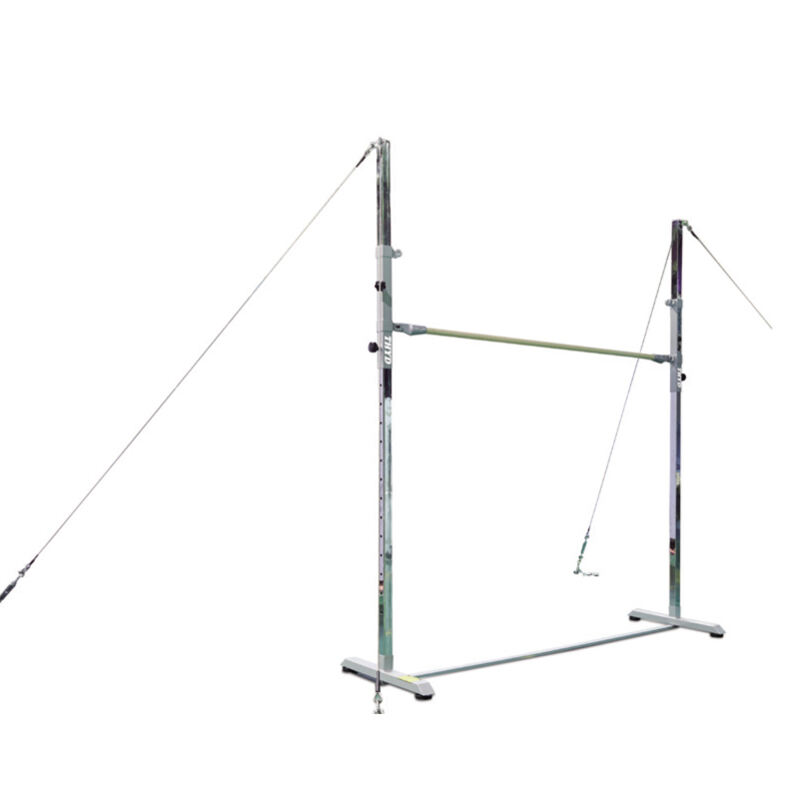
Commercial gymnastics environments present unique structural challenges that differentiate them from residential or recreational settings. A typical commercial facility might see dozens of athletes performing hundreds of repetitions daily, creating cumulative stress loads that exponentially exceed casual usage patterns. The answer to whether a professional gymnastics bar can handle this demand is conditional—it depends entirely on construction quality, material selection, engineering design, and adherence to rigorous manufacturing standards. High-quality bars engineered specifically for commercial applications incorporate reinforced frameworks, premium-grade materials, and design features that distribute stress effectively across structural components, enabling them to maintain stability and safety even under punishing daily routines.
Engineering Standards That Define Commercial-Grade Durability
Material Composition and Structural Integrity
The foundation of any durable professional gymnastics bar begins with material selection. Commercial-grade equipment typically utilizes high-carbon steel or aircraft-grade aluminum alloys that offer superior tensile strength and fatigue resistance compared to standard materials. These metals undergo heat treatment processes that enhance their crystalline structure, enabling them to absorb repetitive impact forces without developing micro-fractures or permanent deformation. The wall thickness of tubing components in professional gymnastics bar construction typically exceeds residential standards by thirty to fifty percent, providing additional structural buffer against bending moments and torsional stress generated during dynamic movements like giant swings or dismounts.
Beyond raw material quality, the manufacturing process significantly influences durability outcomes. Precision welding techniques using TIG or MIG methods create molecular bonds at joint connections that approach the strength of parent materials themselves. Professional-grade bars feature reinforced connection points at critical stress zones—particularly where uprights meet base frames and where horizontal rails attach to vertical supports. These reinforcement strategies might include gusset plates, double-wall construction at junction points, or engineered stress-distribution geometries that prevent concentration of force at single points. Such design considerations directly answer whether equipment can sustain commercial wear by fundamentally altering how mechanical loads transfer through the structure.
Load Capacity Standards and Safety Margins
Commercial gymnastics facilities require equipment rated for substantially higher load capacities than recreational models. A professional gymnastics bar designed for daily commercial use typically carries static load ratings between 250 to 400 pounds, with dynamic load tolerances accounting for force multiplication during swinging motions. When an athlete performs a giant swing, the centrifugal force can generate loads exceeding three times body weight at peak velocity points. Equipment engineered for commercial environments incorporates safety factors that multiply these calculated loads by additional margins—often designing structures to withstand forces fifty to one hundred percent beyond maximum expected operational loads.
This engineering philosophy explains why quality professional gymnastics bar models maintain structural integrity through thousands of training sessions. The safety margin built into commercial specifications accounts not just for peak forces during individual movements, but for the cumulative fatigue effects of repeated loading cycles. Material science studies demonstrate that metals subjected to cyclical stress below their fatigue threshold can endure virtually unlimited repetitions without failure. Properly engineered commercial bars operate well within these safe zones, ensuring that daily use patterns—even intensive ones—remain within the equipment's designed performance envelope throughout extended service lifetimes measured in years rather than months.
Design Features That Enable Long-Term Commercial Performance
Adjustability Systems and Mechanical Wear Points
Commercial gymnastics environments serve athletes across diverse age groups, skill levels, and physical dimensions, necessitating frequent height and width adjustments. The mechanical systems enabling these adjustments represent potential vulnerability points where daily wear manifests most visibly. A professional gymnastics bar engineered for commercial durability incorporates hardened steel pins, reinforced locking mechanisms, and precision-machined adjustment holes that resist deformation even after thousands of configuration changes. The spacing and diameter of adjustment holes follows engineering calculations that prevent stress concentration while maintaining structural continuity along vertical supports.
Advanced commercial models feature self-lubricating bushings or bearing systems at adjustment interfaces, reducing friction and preventing the galling or seizing that commonly affects lower-grade equipment. These components often utilize materials like bronze or specialized polymer compounds that provide inherent lubrication properties, eliminating the maintenance burden while extending operational lifespan. The investment in such engineering details directly correlates with whether equipment maintains smooth functionality throughout commercial service life or degrades into sticky, difficult-to-adjust systems that compromise both user experience and operational efficiency in busy training environments.
Base Stability and Floor Interface Engineering
The interaction between a professional gymnastics bar and the facility floor represents another critical durability consideration in commercial contexts. Equipment subjected to daily use must maintain positional stability despite repetitive lateral forces, vibration transmission, and the constant movement of athletes mounting and dismounting. Commercial-grade bars typically feature base footprints that exceed residential models by substantial margins, distributing weight across larger surface areas and lowering the center of gravity to enhance tipping resistance. The geometry of base frames follows structural engineering principles that create triangulated support patterns, efficiently channeling forces downward into floor surfaces rather than allowing lateral deflection.
Floor contact points on durable professional gymnastics bar designs incorporate specialized materials that prevent both equipment damage and floor surface degradation. High-density rubber pads or polyurethane caps protect wooden gymnasium floors from compression damage while providing friction coefficients that resist sliding without requiring permanent anchoring. Some commercial models integrate adjustable leveling feet that compensate for minor floor irregularities, ensuring that weight distribution remains balanced across all contact points regardless of installation location. This attention to interface engineering prevents the development of stress concentrations that could accelerate wear on both equipment and facility infrastructure, contributing significantly to long-term durability in commercial applications.
Usage Patterns and Their Impact on Equipment Longevity
Training Intensity Variations in Commercial Settings
The actual wear pattern experienced by a professional gymnastics bar in commercial use depends substantially on the specific training programs and athlete populations using the facility. Competitive training programs focused on advanced skills generate different stress profiles than recreational classes serving beginners. Advanced athletes performing release moves, complex transitions, and high-amplitude swings create peak force events that test equipment capabilities at their upper limits. However, these intensive movements typically represent a smaller percentage of total usage time compared to the countless repetitions of fundamental skills performed by developing gymnasts who comprise the majority of commercial facility populations.
This usage diversity actually benefits equipment longevity in well-managed facilities. The professional gymnastics bar experiences varied loading patterns rather than repetitive identical stress cycles, which can paradoxically reduce fatigue accumulation compared to highly uniform loading scenarios. Material fatigue occurs most rapidly when stress cycles repeat at consistent amplitudes and frequencies, creating resonance effects that propagate micro-damage. The natural variation inherent in commercial training environments—different athletes, different skills, different movement patterns—distributes wear more evenly across structural components and prevents the development of localized fatigue zones that might otherwise precipitate premature failure.
Environmental Factors in Commercial Facilities
Beyond mechanical stress, environmental conditions within commercial gymnastics facilities influence how well equipment withstands daily use over extended periods. Temperature fluctuations, humidity levels, and exposure to chalk dust all affect material properties and surface conditions. Professional gymnastics bar models designed for commercial applications incorporate corrosion-resistant finishes—powder coating, anodizing, or specialized paint systems—that create barrier layers protecting base metals from oxidation and chemical exposure. These protective coatings must withstand not just environmental exposure but also the abrasive action of hands repeatedly gripping rails and the chemical interaction with gymnastics chalk, which contains magnesium carbonate compounds that can interact with certain metal finishes.
Climate control within training facilities significantly impacts equipment longevity. Facilities maintaining consistent temperature and moderate humidity levels preserve material properties and prevent the expansion-contraction cycles that can loosen mechanical connections over time. In contrast, facilities experiencing wide temperature swings or persistent high humidity may observe accelerated wear in adjustment mechanisms, fasteners, and protective finishes. The capacity of a professional gymnastics bar to withstand daily commercial wear thus depends partially on factors beyond the equipment itself—facility management practices, environmental controls, and operational protocols all contribute to the realized durability outcomes that determine whether equipment meets, exceeds, or falls short of expected service lifetimes.
Maintenance Protocols That Extend Commercial Equipment Life
Systematic Inspection and Preventive Maintenance
Even the most robustly engineered professional gymnastics bar requires systematic maintenance to achieve its full durability potential in commercial applications. Preventive maintenance protocols should include daily visual inspections checking for obvious damage, loose fasteners, or unusual wear patterns. Weekly detailed inspections examine mechanical adjustment systems, verify torque specifications on critical bolts, and assess the condition of floor contact pads. Monthly maintenance cycles might include lubrication of moving parts, detailed measurement of critical dimensions to detect subtle deformation, and functional testing of safety mechanisms. These layered inspection protocols identify emerging issues before they compromise structural integrity or safety performance.
Documentation practices amplify the value of maintenance programs by creating historical records that reveal long-term wear patterns and predict remaining service life. Facilities maintaining detailed logs of inspection findings, adjustment frequency, and usage intensity can identify when specific components approach replacement thresholds before catastrophic failure occurs. This proactive approach transforms maintenance from reactive repair to strategic asset management, significantly extending the operational lifespan of professional gymnastics bar equipment while simultaneously enhancing safety margins. The difference between equipment that fails prematurely and equipment that delivers decades of reliable service often traces directly to the quality and consistency of maintenance protocols rather than initial manufacturing quality alone.
Component Replacement Strategies
Commercial-grade equipment design increasingly incorporates modularity that facilitates component replacement without requiring complete system replacement. A professional gymnastics bar engineered for long-term commercial use features replaceable wear components—adjustment pins, locking mechanisms, protective pads, and connection hardware—that can be serviced individually as they reach end-of-life conditions. This modular philosophy dramatically improves the economic sustainability of commercial operations by allowing targeted replacement of high-wear components while preserving the substantial investment in primary structural elements that typically outlast accessory components by factors of five to ten.
Strategic component replacement extends beyond simple wear items to include proactive upgrades that incorporate improved materials or designs as manufacturing technology advances. Facilities might replace original adjustment systems with enhanced mechanisms offering smoother operation or greater durability, or upgrade base pads to newer compounds providing superior floor protection. These incremental improvements accumulate over equipment lifespan, resulting in professional gymnastics bar systems that actually improve in performance and durability over time rather than gradually degrading. This approach requires initial investment in equipment designed with serviceability in mind—products featuring standardized fasteners, accessible connection points, and manufacturer support for replacement components throughout extended service periods.
Comparative Performance in Real-World Commercial Applications
Usage Metrics from Active Training Facilities
Empirical data from operational gymnastics facilities provides valuable insight into how professional gymnastics bar equipment performs under actual commercial conditions. Established training centers report equipment service lives ranging from five to fifteen years depending on initial quality, usage intensity, and maintenance consistency. Facilities serving primarily recreational populations with moderate training volumes typically observe longer equipment lifespans, with structural components remaining serviceable well beyond decade-long periods. Conversely, elite training centers hosting competitive athletes practicing advanced skills experience accelerated wear rates, though properly specified commercial equipment still delivers five to eight years of reliable performance before requiring major component replacement or retirement.
These performance windows contrast sharply with residential-grade equipment pressed into commercial service, which typically exhibits significant degradation within eighteen to thirty-six months under daily facility use. The differential stems from fundamental design philosophy—residential equipment optimizes for initial cost and occasional use, while commercial-grade professional gymnastics bar models optimize for total cost of ownership across extended service periods. The premium investment in commercial specifications delivers three to five times longer service life, translating to superior economic value despite higher acquisition costs. Facility managers increasingly recognize this calculus, prioritizing equipment durability as a primary selection criterion alongside safety certification and functional performance.
Failure Mode Analysis and Design Evolution
Understanding how professional gymnastics bar equipment fails in commercial applications informs continuous improvement in design and manufacturing. Common failure modes include fatigue cracking at weld joints, permanent deformation of adjustment mechanisms, wear-through of protective coatings, and loosening of mechanical fasteners. Modern commercial designs specifically address these historical weak points through engineering countermeasures—reinforced welding with stress-relief heat treatment, hardened adjustment components manufactured to tighter tolerances, advanced coating systems with superior adhesion and abrasion resistance, and self-locking fastener designs that maintain preload despite vibration exposure.
This iterative design evolution means that current-generation professional gymnastics bar equipment demonstrates substantially improved durability compared to models manufactured even five to seven years ago. Manufacturers incorporating field performance data into design updates create products that explicitly address real-world commercial wear patterns rather than theoretical laboratory conditions. Facilities investing in recently developed commercial equipment benefit from this accumulated knowledge, acquiring systems that incorporate lessons learned from thousands of training facilities worldwide. The question of whether professional gymnastics bar equipment can withstand daily commercial wear thus has an increasingly affirmative answer as manufacturing sophistication advances and design optimization focuses specifically on commercial application requirements.
FAQ
How long should a professional gymnastics bar last in a commercial facility?
A properly specified and maintained professional gymnastics bar in commercial use should deliver five to fifteen years of reliable service depending on usage intensity and maintenance quality. Facilities implementing systematic inspection protocols and proactive component replacement often achieve service lives exceeding ten years even with intensive daily use. The wide range reflects variations in training volume, athlete skill levels, environmental conditions, and initial equipment quality. Investing in commercial-grade equipment with documented durability testing and robust warranty coverage provides greater assurance of extended service life compared to economy models lacking commercial specifications.
What are the most common wear points on commercial gymnastics bars?
The most frequent wear locations on professional gymnastics bar equipment include adjustment mechanisms where pins and holes experience repeated insertion and removal, horizontal rail surfaces where hands grip and swing creating friction wear, base frame floor contact points that absorb impact forces, and mechanical fasteners subjected to vibration and stress cycling. Protective coatings around high-contact areas may show accelerated degradation from chalk exposure and hand oils. Quality commercial designs reinforce these predictable wear zones with hardened materials, replaceable components, and enhanced surface treatments that extend service intervals between required maintenance or replacement actions.
Can residential-grade gymnastics bars be used in commercial settings?
Residential-grade gymnastics equipment should not be used in commercial training facilities due to fundamental differences in structural design, load capacity, and durability specifications. Residential models optimize for occasional home use by individual athletes, incorporating lighter-duty materials and simplified construction that reduces manufacturing costs. Commercial environments subject equipment to usage intensities ten to twenty times greater than residential patterns, rapidly exceeding design limits of home-use models. Attempting commercial deployment of residential equipment creates liability concerns, accelerated failure risks, and poor economic outcomes as frequent replacement negates initial cost savings. Commercial facilities require purpose-built professional gymnastics bar equipment certified for institutional use.
What maintenance tasks are essential for commercial gymnastics bar longevity?
Essential maintenance for professional gymnastics bar equipment in commercial settings includes daily visual inspections for obvious damage or loose components, weekly detailed checks of adjustment mechanisms and fastener tightness, monthly lubrication of moving parts with appropriate products, quarterly measurement verification of critical dimensions to detect subtle deformation, and annual comprehensive inspections documenting component condition and remaining service life. Maintaining detailed maintenance logs enables trend analysis that predicts component replacement timing before failure occurs. Facilities should also establish cleaning protocols removing chalk accumulation and moisture that accelerate corrosion, and implement environmental controls maintaining stable temperature and moderate humidity levels that preserve material properties throughout extended service periods.
Table of Contents
- Engineering Standards That Define Commercial-Grade Durability
- Design Features That Enable Long-Term Commercial Performance
- Usage Patterns and Their Impact on Equipment Longevity
- Maintenance Protocols That Extend Commercial Equipment Life
- Comparative Performance in Real-World Commercial Applications
- FAQ