 EN
EN


The springboard serves as a critical biomechanical amplifier in vault training, transforming horizontal momentum into explosive vertical takeoff power through sophisticated energy transfer mechanisms. When gymnasts approach the vault table, the springboard acts as an elastic energy storage and release system that can increase takeoff velocity by 15-25% compared to direct floor takeoff, fundamentally altering the physics of aerial performance and enabling complex vault skills that would otherwise be impossible.
Understanding how a springboard improves takeoff power requires examining the intricate interplay between approach speed, board compression, energy storage, and release timing that collectively determine vault success. The springboard mechanism operates on principles of elastic potential energy conversion, where the gymnast's kinetic energy from the run-up is temporarily stored in the compressed springs before being released back into the system with additional force multiplication, creating the enhanced takeoff power essential for advanced vaulting techniques.
Energy Transfer Mechanics in Springboard Systems
Kinetic to Potential Energy Conversion
The springboard improves takeoff power through a sophisticated energy conversion process that begins when the gymnast's feet make contact with the board surface. During the contact phase, which typically lasts 0.15 to 0.2 seconds, the gymnast's horizontal kinetic energy is partially converted into elastic potential energy as the springs compress under the applied force. This compression phase allows the springboard to store energy that would otherwise be lost through ground contact, creating a temporary energy reservoir that amplifies the subsequent takeoff.
The efficiency of this energy transfer depends on several biomechanical factors, including approach velocity, contact angle, and timing of force application. Research indicates that optimal springboard utilization occurs when gymnasts maintain approach speeds between 7.5 and 8.5 meters per second, allowing sufficient momentum for effective spring compression while maintaining control for precise takeoff positioning. The springboard's ability to store and release this energy creates a multiplicative effect that can increase vertical velocity components by 20-30% compared to static takeoff conditions.
Spring Compression Dynamics
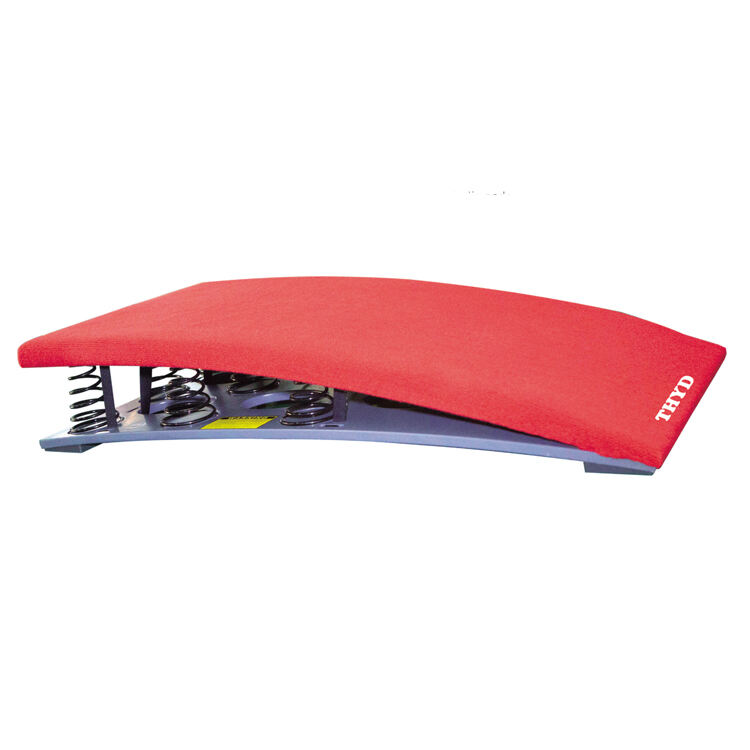
The compression dynamics of a springboard directly influence takeoff power through controlled deformation and recovery cycles that optimize energy return. Modern gymnastics springboards typically feature 8 to 12 steel springs arranged to provide graduated resistance, ensuring that initial compression is relatively easy while maximum compression requires substantial force. This progressive resistance curve allows gymnasts to achieve deep compression without experiencing harsh impact forces that could disrupt timing or cause injury.
During the compression phase, the springboard can deflect 15 to 25 centimeters under optimal loading conditions, storing significant elastic potential energy that contributes to enhanced takeoff power. The spring configuration and tension settings determine how effectively this stored energy translates into upward force during the release phase. Professional-grade springboards are calibrated to provide maximum energy return while maintaining predictable response characteristics that allow gymnasts to develop consistent timing and technique.
Biomechanical Advantages of Springboard Utilization
Force Multiplication and Timing
The springboard improves takeoff power by creating force multiplication opportunities that exceed what human muscle systems can generate independently. When properly utilized, a springboard can amplify the gymnast's ground reaction forces by 40-60%, effectively increasing the total force available for takeoff without requiring additional muscular effort. This force multiplication occurs because the springboard releases stored elastic energy in addition to the force generated by the gymnast's leg muscles, creating a combined force output that substantially exceeds individual muscular capacity.
Timing coordination between muscular force application and springboard release represents a critical factor in maximizing takeoff power. Elite gymnasts develop precise timing patterns that synchronize their explosive leg extension with the springboard's natural rebound cycle, typically occurring 0.08 to 0.12 seconds after initial contact. This synchronization ensures that muscular force and elastic force combine constructively rather than working against each other, optimizing the total energy transfer into vertical and rotational components needed for successful vault execution.
Angular Momentum and Trajectory Control
Beyond vertical force amplification, the springboard improves takeoff power by facilitating angular momentum generation and trajectory control that enhance overall vault performance. The angled surface of a properly positioned springboard allows gymnasts to convert horizontal approach momentum into both vertical lift and rotational energy, creating the complex motion patterns required for advanced vault skills. This multi-directional force application enables gymnasts to achieve optimal takeoff angles between 15 and 25 degrees from vertical, balancing height requirements with forward progression needs.
The springboard's response characteristics also provide valuable feedback that helps gymnasts adjust their approach and takeoff technique for maximum power output. The tactile and kinesthetic information transmitted through springboard contact allows athletes to make real-time adjustments to foot placement, contact duration, and force application patterns. This feedback system enables continuous refinement of takeoff technique, leading to progressively improved power generation and more consistent vault performance.
Technical Factors Affecting Power Generation
Approach Speed and Contact Mechanics
The relationship between approach speed and springboard effectiveness demonstrates how proper technique amplifies takeoff power through optimized energy input and transfer efficiency. Gymnasts must achieve sufficient approach velocity to compress the springboard effectively while maintaining the body position and control necessary for precise takeoff execution. Studies show that approach speeds below 7 meters per second result in insufficient spring compression, limiting the energy storage potential and reducing overall takeoff power by 25-35%.
Contact mechanics play an equally important role in determining how effectively the springboard improves takeoff power. The foot placement pattern, contact duration, and force application angle all influence energy transfer efficiency and subsequent power output. Optimal contact involves a heel-to-toe rolling motion that maximizes contact time with the springboard surface while maintaining forward momentum. This extended contact period, typically lasting 0.18 to 0.22 seconds, allows for more complete energy transfer and helps ensure that the springboard's elastic response aligns with the gymnast's takeoff timing.
Spring Tension and Surface Configuration
The technical specifications of the springboard itself significantly impact how effectively it can improve takeoff power through proper tension settings and surface configuration. Spring tension adjustments allow coaches to customize the springboard's response characteristics to match individual gymnast needs and skill levels. Harder spring settings provide more aggressive energy return for advanced athletes with sufficient approach speed and strength, while softer settings offer more forgiving response characteristics for developing gymnasts.
Surface configuration factors, including board angle, height, and positioning relative to the vault table, also influence takeoff power generation. The springboard angle typically ranges from 10 to 20 degrees above horizontal, with steeper angles favoring vertical lift and shallower angles promoting forward trajectory. Optimal surface configuration ensures that the springboard's energy release direction aligns with the desired takeoff vector, maximizing the contribution of stored elastic energy to overall vault performance.
Training Applications and Performance Benefits
Progressive Skill Development
In vault training applications, the springboard improves takeoff power in ways that facilitate progressive skill development and enable gymnasts to attempt more advanced techniques safely. Beginning gymnasts benefit from the springboard's assistance in achieving sufficient height and flight time for basic vault skills, while advanced athletes rely on maximum power generation for complex multi-rotational vaults. The consistent power amplification provided by a quality springboard allows gymnasts to focus on perfecting technique and timing rather than struggling to generate adequate takeoff force.
The power enhancement provided by springboard utilization also supports injury prevention by reducing the muscular stress required for effective vault performance. When gymnasts can rely on the springboard's energy contribution to achieve necessary takeoff velocity, they experience less strain on leg muscles, joints, and connective tissues. This reduced physical stress enables longer training sessions and more repetitions without excessive fatigue, supporting skill acquisition and performance improvement over time.
Consistency and Technique Refinement
The mechanical consistency of a well-maintained springboard provides a stable platform for technique refinement that directly contributes to improved takeoff power generation. Unlike variable factors such as muscular fatigue or environmental conditions, a properly calibrated springboard delivers predictable response characteristics that allow gymnasts to develop reliable timing patterns and force application techniques. This consistency enables athletes to make incremental adjustments to their approach and takeoff method, gradually optimizing their ability to extract maximum power from the springboard system.
Regular training with a springboard also develops proprioceptive awareness and neuromuscular coordination that enhances overall takeoff power through improved movement efficiency. Gymnasts learn to sense the springboard's compression and rebound cycles, allowing them to synchronize their muscular contributions with the elastic energy release for maximum combined force output. This developed sensitivity to springboard dynamics becomes particularly valuable in competition settings where slight variations in equipment characteristics can affect performance outcomes.
FAQ
How much additional height can a springboard provide compared to jumping from the floor?
A properly utilized springboard can increase takeoff height by 30-50 centimeters compared to jumping directly from the floor, depending on the gymnast's approach speed, technique, and the springboard's spring tension settings. This height increase translates to additional flight time of 0.2 to 0.3 seconds, which is crucial for completing complex vault rotations and achieving proper landing position.
What approach speed is optimal for maximum springboard power generation?
Research indicates that approach speeds between 7.5 and 8.5 meters per second provide optimal springboard power generation for most gymnasts. Speeds below this range result in insufficient spring compression and reduced energy storage, while excessive speeds can lead to loss of control and decreased efficiency in energy transfer from the springboard to the gymnast's takeoff motion.
How does spring tension affect takeoff power in vault training?
Spring tension directly influences takeoff power by controlling the springboard's energy storage and release characteristics. Higher tension settings provide more aggressive power amplification but require greater approach speed and strength for effective utilization. Lower tension settings offer more forgiving response but may limit maximum power output. Optimal tension should match the gymnast's skill level and physical capabilities for maximum training benefit.
Can improper springboard technique reduce takeoff power?
Yes, improper springboard technique can significantly reduce takeoff power and may even result in less effective takeoff than jumping from the floor. Common technical errors include insufficient approach speed, poor foot placement, incorrect timing of muscular force application, and failure to maintain forward momentum through the contact phase. These errors prevent effective energy transfer and can cause the springboard to work against rather than with the gymnast's takeoff efforts.